
India, the world’s seventh-largest country by area, is a vibrant tapestry of cultures spread across its 28 states and 8 Union Territories. Every state is a world unto itself, offering unique traditional attire, cuisine, and annual festivals that define its identity.
India’s vibrant federal structure is composed of administrative units that have evolved significantly since the country’s independence. For students, competitive exam aspirants, and general knowledge enthusiasts, keeping track of these units is essential. Lets explore List of 29 States of India below:-
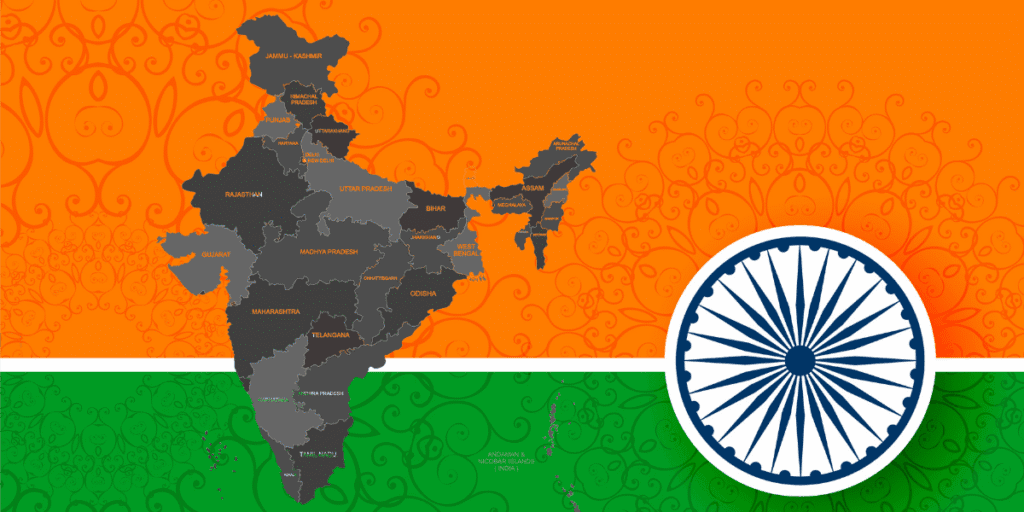
Crucial Fact Check & Clarification (List of 29 States of India)
It is important to note that, as of 2024, India currently has 28 States and 8 Union Territories.
The confusion about the ’29 states’ comes from two major events:
- The formation of Telangana in 2014, which briefly made the count 29.
- The subsequent reorganization of the State of Jammu and Kashmir into two Union Territories (J&K and Ladakh) in 2019, which reduced the state count back to 28.
Key Difference: A State has its own elected government, whereas a Union Territory is centrally administered by an appointee of the President (known as an Administrator or Lieutenant Governor).
List of 29 States of India
The table below provides the full, official list of the 28 Indian States with their administrative capitals and formation dates.
| S. No. | State Name | Capital (Administrative) | Formation Date | Official Language(s) |
| 1 | Andhra Pradesh | Amaravati | 1956 | Telugu |
| 2 | Arunachal Pradesh | Itanagar | 1987 | English |
| 3 | Assam | Dispur | 1950 | Assamese, Boro |
| 4 | Bihar | Patna | 1950 | Hindi |
| 5 | Chhattisgarh | Raipur | 2000 | Hindi |
| 6 | Goa | Panaji | 1987 | Konkani |
| 7 | Gujarat | Gandhinagar | 1960 | Gujarati |
| 8 | Haryana | Chandigarh | 1966 | Hindi |
| 9 | Himachal Pradesh | Shimla (S), Dharamshala (W) | 1971 | Hindi |
| 10 | Jharkhand | Ranchi | 2000 | Hindi |
| 11 | Karnataka | Bengaluru | 1956 | Kannada |
| 12 | Kerala | Thiruvananthapuram | 1956 | Malayalam |
| 13 | Madhya Pradesh | Bhopal | 1956 | Hindi |
| 14 | Maharashtra | Mumbai (S), Nagpur (W) | 1960 | Marathi |
| 15 | Manipur | Imphal | 1972 | Manipuri |
| 16 | Meghalaya | Shillong | 1972 | English |
| 17 | Mizoram | Aizawl | 1987 | Mizo, English |
| 18 | Nagaland | Kohima | 1963 | English |
| 19 | Odisha | Bhubaneswar | 1950 | Odia |
| 20 | Punjab | Chandigarh | 1966 | Punjabi |
| 21 | Rajasthan | Jaipur | 1956 | Hindi |
| 22 | Sikkim | Gangtok | 1975 | Nepali |
| 23 | Tamil Nadu | Chennai | 1956 | Tamil |
| 24 | Telangana | Hyderabad | 2014 | Telugu, Urdu |
| 25 | Tripura | Agartala | 1972 | Bengali, Kokborok |
| 26 | Uttar Pradesh | Lucknow | 1950 | Hindi, Urdu |
| 27 | Uttarakhand | Dehradun (W), Gairsain (S) | 2000 | Hindi, Sanskrit |
| 28 | West Bengal | Kolkata | 1950 | Bengali |
The 8 Union Territories (UTs)
| S. No. | Union Territory | Capital City | Date of Reorganization | Governing Body |
| 1 | Andaman and Nicobar Islands | Port Blair | 1956 | Administrator |
| 2 | Chandigarh | Chandigarh | 1966 | Administrator |
| 3 | Dadra & Nagar Haveli and Daman & Diu | Daman | 2020 (Merged UT) | Administrator |
| 4 | Delhi (National Capital Territory) | New Delhi | 1956 | Lieutenant Governor + Elected Assembly |
| 5 | Jammu and Kashmir | Srinagar (S), Jammu (W) | 2019 (Reorganized UT) | Lieutenant Governor + Elected Assembly |
| 6 | Ladakh | Leh | 2019 (Reorganized UT) | Lieutenant Governor |
| 7 | Lakshadweep | Kavaratti | 1956 | Administrator |
| 8 | Puducherry | Puducherry | 1962 | Lieutenant Governor + Elected Assembly |
Western States of India: Industrial Power and Coastal Charms
The Western region, comprising states like Maharashtra, Gujarat, and Goa, is a dynamic mix of industrial progress, ancient history, and beautiful coastal landscapes. This region plays a central role in India’s economy and cinema, yet it remains deeply rooted in tradition.
The food of western India has a unique identity. The cuisine of Gujarat is globally recognized for being vegetarian and containing foods that are sweet and sour, like dhoklas and khandvis. The cuisine of Maharashtra is the birthplace of popular international street foods such as pav bhaji and vada pav. This region is also a region of celebration and festivals such as Ganesh Chaturthi in Maharashtra and Navratri in Gujarat where people gather to dance Garba and Dandiya. Goa has a strong Portuguese influence that is seen in its architecture and cuisine, which is a mix of Indian and European cultures and is heavy on seafood.
Eastern States of India: Rivers, Temples, and Artistic Legacies
The Eastern states, including West Bengal, Bihar, Jharkhand, and Odisha, are historically and geographically defined by the mighty rivers the Ganges and the Mahanadi and a deep commitment to arts and intellectual pursuits.
As the cultural center of India, West Bengal has produced numerous Nobel Prize winners and is known for its distinctive Bengali artistic and literary tradition. Examples of its world-renowned creativity include its incredible Pāla bronze sculptures and the famous Durga Puja festival, where large parts of the cities are transformed into works of art. Odisha is a major pilgrimage site; it contains the Jagannath Puri Temple, which is considered one of the most sacred temples in India and is part of the UNESCO World Heritage Site of the Konark Sun Temple.
The main staple food in Odisha is rice, with a variety of delicacies ranging from the elaborate Bengali rice-based sweets (mishti) to Litti Chokha, a simple dish typically prepared in rural Bihari households. Odisha’s rich tribal culture is highlighted by its many folk dances, the most recognized of which is the martial dance, Chhau, which is prevalent in Odisha, West Bengal, and Jharkhand.
Northeastern States of India: The Seven Sisters and Sikkim
The Northeast, a breathtaking expanse of lush mountains and dense forests, encompasses the seven contiguous states (popularly known as the Seven Sisters: Arunachal Pradesh, Assam, Manipur, Meghalaya, Mizoram, Nagaland, and Tripura), plus Sikkim. This region is a global biodiversity hotspot, hosting over 200 distinct tribal communities.
The culture is largely characterized by a reliance on indigenous traditions, unique handlooms, and a strong connection to nature. Each tribe has a distinct dialect, dress, and festival:
- Assam celebrates the Bihu festival, tied to the harvest cycle, and is globally recognized for the single-horned rhino in Kaziranga.
- Nagaland hosts the famous Hornbill Festival, a gathering that showcases the cultural splendor and warrior traditions of the various Naga tribes.
- Meghalaya is known for its unique Living Root Bridges and being home to the wettest places on Earth (Mawsynram/Cherrapunji).
- The cuisine is distinct from the rest of India, focusing on simple, fermented foods, bamboo shoots, and minimal use of oil and spices. The region’s vibrant identity and untouched beauty make it one of India’s most fascinating cultural frontiers
Historical Context and State Trivia
Key Milestones in State Formation
- The States Reorganization Act, 1956: This act established states primarily along linguistic lines.
- 2000: Three new states were created: Chhattisgarh (from MP), Uttarakhand (from UP), and Jharkhand (from Bihar).
- 2014: Telangana was formed as the 29th State, carved out of Andhra Pradesh.
- 2019: The State of Jammu and Kashmir was reorganized into two Union Territories (J&K and Ladakh), reducing the state count to 28.
- 2020: The UTs of Dadra & Nagar Haveli and Daman & Diu were merged for administrative efficiency.
Comparative State Data (GK Points)
- Largest State by Area: Rajasthan (342,239 sq km).
- Smallest State by Area: Goa (3,702 sq km).
- Largest State by Population (2011 Census): Uttar Pradesh.
- Smallest State by Population (2011 Census): Sikkim.
- Highest Literacy Rate: Kerala.
C. Regional Grouping (The North-East Focus)
- The Seven Sisters (often used for GK): Arunachal Pradesh, Assam, Manipur, Meghalaya, Mizoram, Nagaland, and Tripura. Sikkim is geographically part of the region but not one of the “Seven Sisters.”
Read More:-
Conclusion
India’s list of states and Union Territories is dynamic, reflecting the continuous evolution of its political landscape. Understanding the 28 States and 8 Union Territories, along with their capitals and the historical context of their formation, is crucial for anyone studying India’s geography and governance.
By clarifying the transition from 29 states to 28, this guide provides the most current and accurate administrative facts about the Republic of India.
Frequently Asked Questions (FAQs)
Q1. Why are people confused about 29 states?
A. The list briefly contained 29 states after the creation of Telangana in 2014. The list returned to 28 when the State of Jammu and Kashmir was converted into two Union Territories in 2019.
Q2. What is the latest change in the list of states and UTs?
A. The latest major change was the reorganization of Jammu and Kashmir (2019) and the subsequent merger of two Union Territories (Dadra & Nagar Haveli and Daman & Diu) in 2020.
Q3. Is Delhi a full state?
A. No, Delhi is the National Capital Territory (NCT), a type of Union Territory. It has its own elected legislative assembly but remains under the overall jurisdiction of the central government.
Q4. Which state has two capitals?
A. Himachal Pradesh (Shimla and Dharamshala) and Maharashtra (Mumbai and Nagpur) are key examples, in addition to the Union Territories of J&K (Srinagar and Jammu).